Liz Chrastil Presents at the NIH Cognitive Aging Summit!

Liz Chrastil presented at the fourth NIH Cognitive Aging Summit held on March 20th, 2024! Here, she discussed our lab’s findings with regards to Human spatial navigation during midlife: Sex differences in behavior and circuitry, and addressed the following questions:

  1. How do navigation abilities change during early aging?
  2. Do the circuits that are associated with navigation change as we age?
  3. How do sex differences in navigation change during the course of aging?
  4. Do any changes in navigation ability relate to the menopausal transition?
  5. Can we use navigation as a tool to determine risk for dementia, especially for women?

Overall, the NIH Cognitive Aging Summit gathered scientific presentations and discussion of age-related brain and cognitive change, with a particular focus on individual differences and the development of personalized approaches to the remediation of decline and the maintenance of health.

Dr. Vaisakh Puthusseryppady joins the School of Social & Behavioral Sciences at Tilburg University as an Assistant Professor!

We would like to congratulate Vaisakh Puthusseryppady for being offered, and accepting an assistant professorship at Tilburg University in the School of Social & Behavioral Sciences! Starting in September 2024 as a Assistant Professor of Cognitive Psychology, Vaisakh plans on developing a research program specifically looking at the early identification of Alzheimer’s disease using spatial navigation as a behavioral biomarker, as well as developing cognitive training interventions to improve navigation ability in the aging population.

Vaisakh has been studying aspects of Alzheimer’s disease identification and navigation ability in the midlife-older populations since starting his postdoctoral position here in the Spatial Neuroscience Lab in 2021.

We’re excited to see his future findings and wish him the best at Tilburg University in the fall!

Members from the Spatial Neuroscience Lab Present at SfN and Psychonomics 2023

This year, several of our lab members presented their research at Neuroscience 2023, hosted by SfN, and the 2023 Annual Psychonomic Society (Psychonomics) Meeting. Congratulations to all of our presenters, and congratulations to Liz for being a recipient of the Early Career Awards at Psychonomics!

Society for Neuroscience - Neuroscience 2023undefined

Talks:

  • (Psychonomics) Liz Chrastil – Individual Differences in Human Navigation Ability: Interactions with Brain Structure and Function

Posters

  • (Psychonomics) Alina Tu – Evaluating Consistency in Path Integration Measures: Triangle Completion and Loop Closure
  • (Psychonomics) Luke Chi – Labeled Graphs in Navigation Behavior and Route Choice.
  • (Psychonomics) Marjan Rashidi – The Role of Chronic Stress in Spatial Navigation in Humans
  • (SfN) Daniela Cossio – White Matter Integrity is Associated with Navigation and Differs by Menopause Stage During Midlife
  • (SfN) Erica Ward – Brain Network Connectivity and Dynamics of Navigational Learning and Memory
  • (SfN) Mike Starrett-Ambrose – Brain networks supporting egocentric and allocentric relational processing
  • (SfN) Nikhita Kaushik – The Southern California Youth Neuroscience Association (SCYNA) as a model for engaging high school students in neuroscience

Daniela is awarded the T32 Grant – Training in the Neurobiology of Aging and Alzheimer’s Disease

The Institutional National Research Service Award (T32) is a training grant for predoctoral and postdoctoral trainees to prepare for careers with significant impact in health-related research. Daniela was recently awarded this grant for the Training in the Neurobiology of Aging and Alzheimer’s Disease program specifically, which, according to their grant description online, involves the “preparation and instruction in the application of molecular and quantitative approaches to the elucidation of the cellular and molecular mechanisms of age-related neurodegeneration, brain plasticity, and learning and memory.” The training program will involve an extensive curriculum, close mentorship, and collaborative learning. Congrats, Daniela!

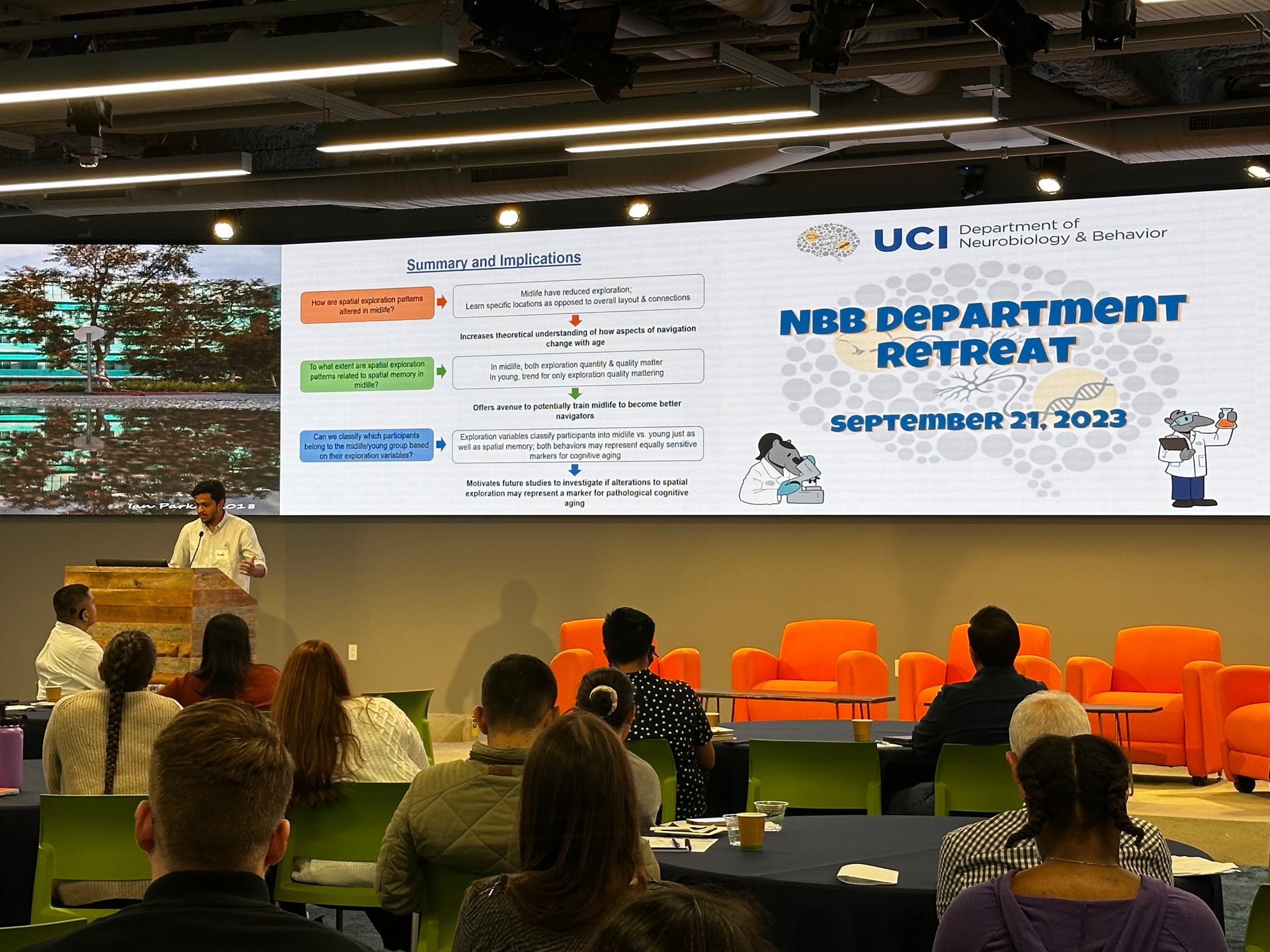
Vaisakh’s Insightful Research at the UCI Neurobiology & Behavior Annual Department Retreat

The Neurobiology & Behavior Department at UCI holds an annual retreat, showcasing the ongoing research and significant discoveries made within the past academic year by key speakers from the department, the School of Biological Sciences, postdoctoral scholars, and graduate students. One of the highlights of this year’s retreat was a presentation by one of our lab’s postdoctoral scholars, Dr. Vaisakh Puthusseryppady. He shared his research on the differences in spatial exploration patterns between healthy young adults and those in midlife. Furthermore, he introduced his pilot study that focuses on understanding how spatial exploration patterns alter in patients who are at risk for Alzheimer’s Disease. Congratulations, Vaisakh!

Dr. Chrastil, Krichmar, & Nitz Awarded an RO1 NIH Grant to Study the Linking of Global Maps to First-Person Perspectives

Dr. Chrastil, in collaboration with Jeff Krichmar (UCI, Department of Cognitive Sciences) and Doug Nitz (UCSD, Department of Cognitive Sciences), has been awarded a $1.5 million RO1 grant from the National Institute of Health (NIH) for their proposed study, “Collaborative Research in Computational Neuroscience: There and back again – Linking global maps to first-person perspectives.”

This study specifically focuses on the cognitive function that enables humans to link first-person perspectives with a global map. This ability to seamlessly transition between both perspectives is crucial for navigation and flexible perspective-taking.

Congratulations to Dr. Chrastil, Krichmar, and Nitz!

Theo Kapogianis presents Advancement Defense to the Department of Neurobiology & Behavior!

Ph.D. candidate Theo Kapogianis completed his Advancement Defense on 09/11/2023, proposing his dissertation “Cognitive Graphs: it’s all connected man. Impact of structure, decision-making, and domain on graph learning”! He proposed three experiments which will investigate 1) structure: components of graphs (informational networks), such as size, edge-to-node ratio, internal complexity and organization. 2) decision-making: the role of decision-making in learning and the brain structures which support learning through decision-making. 3) domain: how learning strategies change over time across different task pressures (repetitive or random) and domains (spatial or abstract).

We look forward to hearing about Theo’s findings across his three experiments. Great job Theo!

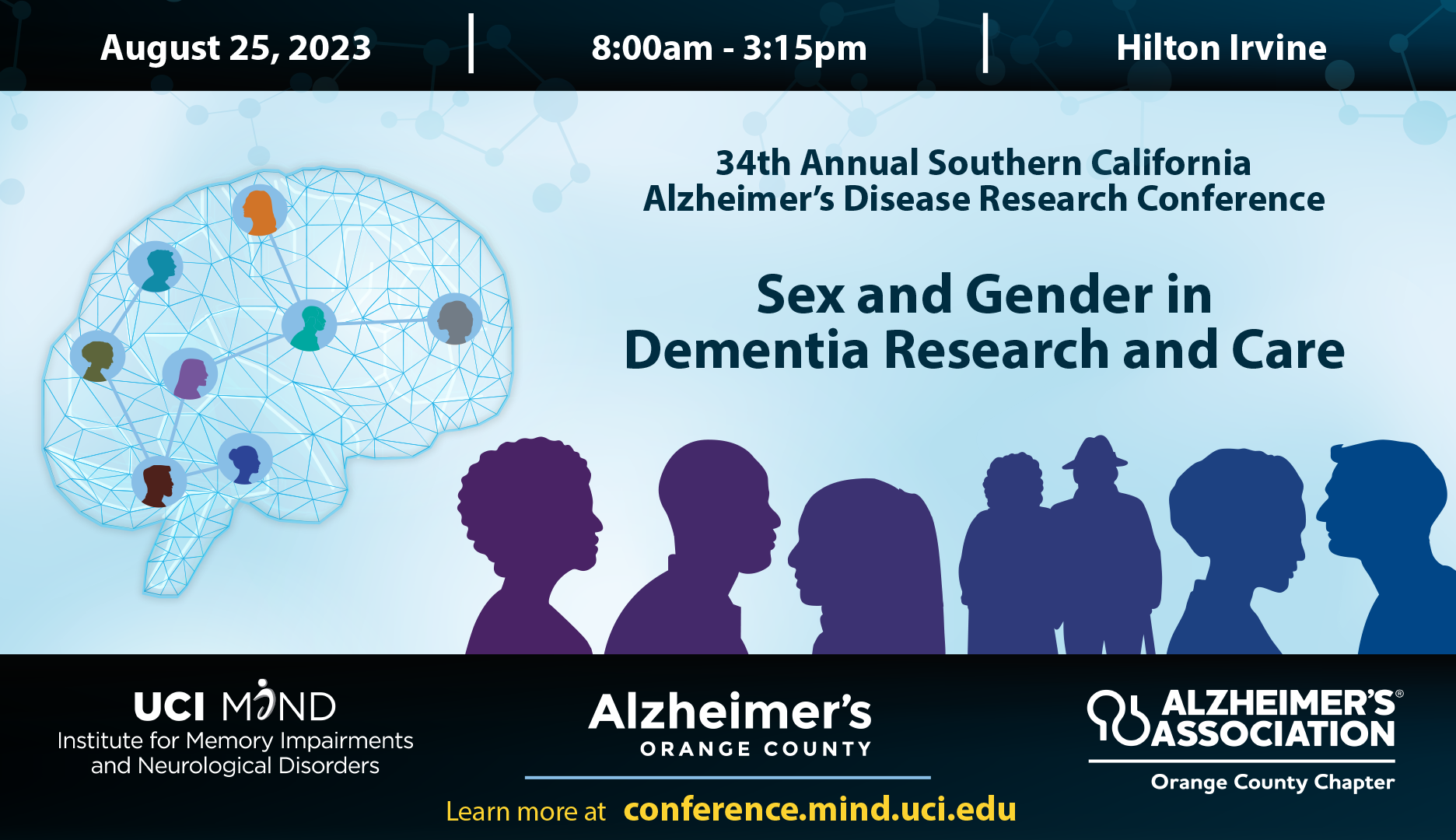
Dr. Chrastil speaks at the Annual SoCal Alzheimer’s Disease Research Conference: Sex differences in spatial navigation during early aging and Alzheimer’s disease

Dr. Elizabeth Chrastil recently spoke at the 34th Annual Southern California Alzheimer’s Disease Research Conference, where she discussed sex differences in spatial navigation during early aging and Alzheimer’s disease. The conference focused on Sex and Gender in Dementia Research and Care, and covered a wide range of topics related to this theme. The conference also addressed the differential burdens faced by sexual and gender minority caregivers of people with dementia. Overall, Dr. Chrastil’s talk focusing on sex differences in spatial navigation in early aging and Alzheimer’s disease at the conference offers a unique lens and perspective on the behavioral symptoms beyond that of traditional cognitive assessments, providing a more comprehensive understanding of the disease and its impact on individuals.

Alayah and Marie present at the 2023 Summer Institute in Neuroscience & UCLEADS Symposia

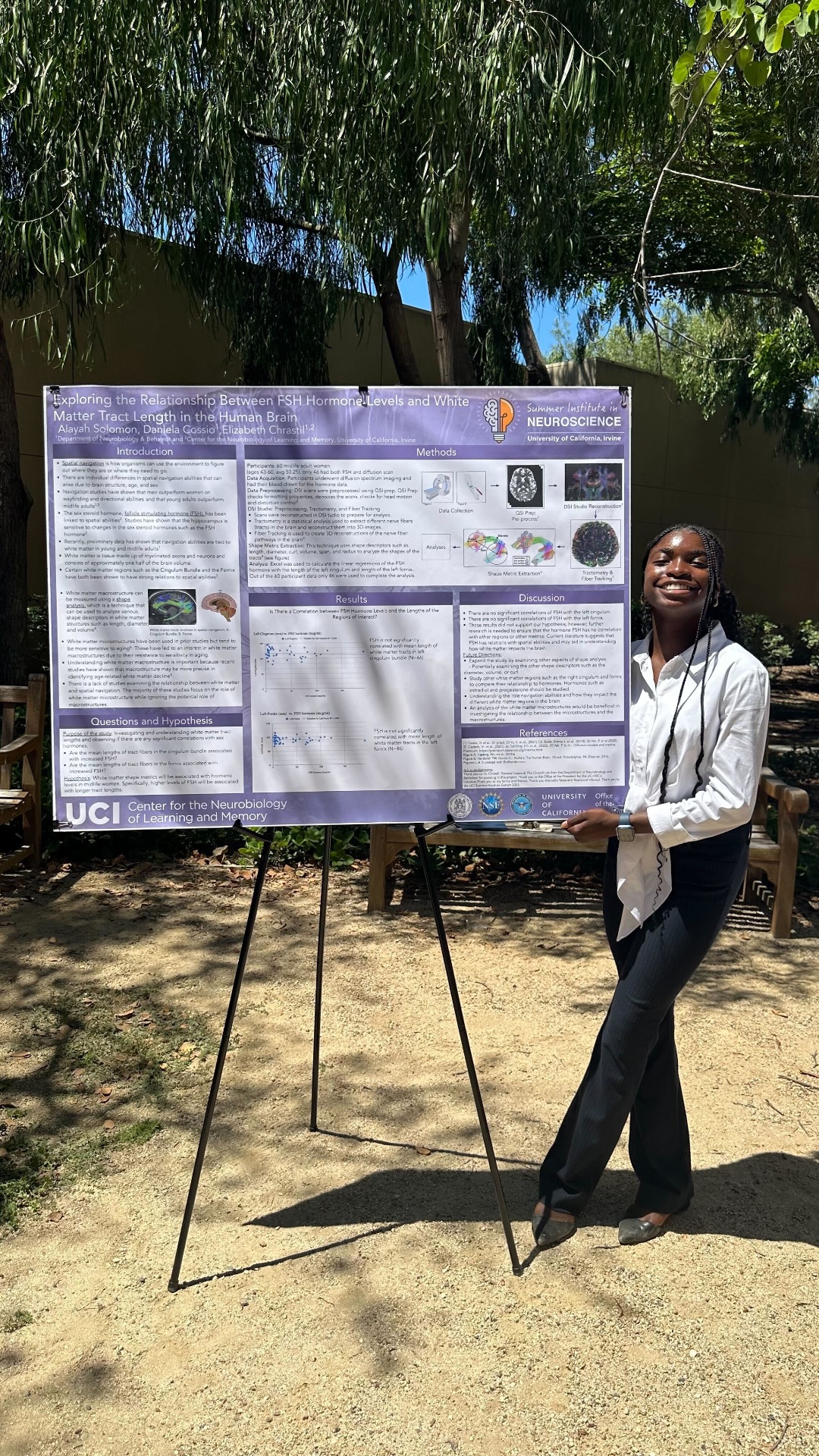
This summer, Dr. Chrastil and our lab mentored two research assistants, Alayah Solomon and Marie Karpinska, who participated in our lab’s spatial neuroscience research and investigated their own research questions. Alayah, a rising sophomore at North Carolina A&T State University, was part of the Summer Institute Neuroscience program at UC Irvine, where she focused on white matter shape analysis and its impact on hormones in midlife adults. The program culminated in a symposium featuring a keynote lecture, short presentations by summer scholars, and a poster session. In addition to conducting research in laboratories, the students participated in cohort-wide activities including workshops on neuroscience methods, professional development opportunities, seminars by faculty, and socials.

Alayah’s poster on the Relationship Between FSH Hormone Levels and White Matter Tract Length

Marie Karpinska, a computer science and psychology student at UCSB, was part of the University of California Leadership Excellence through Advanced Degrees (UC LEADS) program. The program is designed to engage and educate California’s future leaders by preparing promising students for advanced education in science, technology, engineering, and mathematics (STEM). Marie presented on Spatial Working Memory Capacity on Path integration, specifically examining one’s spatial working memory score on loop closure performance.

Marie presents on Spatial Working Memory Capacity on Path Integration

Their motivation and contributions to the lab were invaluable, and we are grateful for their hard work over the summer. We look forward to seeing their continued success. Congratulations, Alayah and Marie!

Neurohackademy 2023 Recap with Erica & Theo

Two of our graduate students, Theo and Erica, recently attended Neurohackademy, a two-week program that provides training in neuroimaging and data science. The program featured a full schedule of lectures and hands-on activities designed to teach researchers the latest techniques and methods for analyzing neuroimaging data.

One of the topics that Erica found particularly interesting was “Measuring and Analyzing Human Functional Brain Networks,” which covered methods for conducting functional connectivity analysis with real data. This is something that Erica plans to do with the MLINDIV data. Another topic that caught her attention was “Machine Learning Methods for Neuroimaging,” which covered how to create and analyze models using real brain data to predict certain outcome measures and then validate the effectiveness of those models.

During the second week of the program, Theo and Erica worked on a team project where they investigated the relationship between metabolic output and brain activity using connectivity measures. Specifically, Erica completed a dynamic community detection analysis and found that the flexibility of the nodes in the default mode network were negatively correlated with FDG-PET values. Overall, Erica and Theo had a great time at Neurohackademy and would recommend it to any student who is interested in learning computational methods for analyzing neuroimaging data. We are proud of Theo and Erica for their participation in Neurohackademy and look forward to seeing how they apply their newly acquired knowledge and skills in their research!